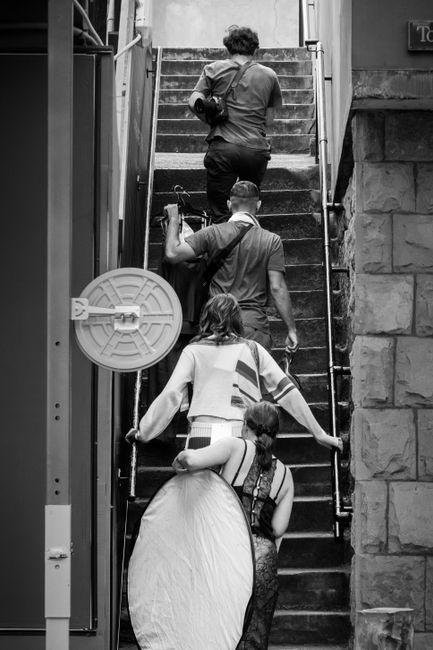
DBS-checked crews: handling tricky narrow-stair moves

Moving through a tight stairwell is rarely just a question of strength. It is a test of timing, trust, patience, and a bit of good judgement. That is where DBS-checked crews: handling tricky narrow-stair moves really stand out. If you are trying to move a sofa around a bendy Victorian staircase, carry a wardrobe past a bannister that looks suspiciously too narrow, or shift office furniture down an old terrace without scuffing the walls, the right crew makes all the difference.
People often think the biggest challenge is the object itself. Sometimes it is. But just as often, the real challenge is the environment: awkward landings, low ceilings, polished steps, shared entrances, or a neighbour's pram left exactly where it should not be. A crew that is DBS-checked adds reassurance too, especially when access to your home, rental property, or workplace needs to feel properly controlled and respectful. In practice, this is about more than moving day muscle. It is about careful handling, visible professionalism, and less stress for everyone involved.
This guide explains what these crews do, why DBS checks matter, how narrow-stair moves are planned, and what to look for before you book. It also covers common mistakes, practical tools, and a simple checklist you can use the night before the move. Let's face it, the stairs will still be stairs. The goal is to make them a lot less dramatic.
Why DBS-checked crews matter for narrow-stair moves
Narrow-stair moves are awkward because they compress several risks into a small space. There is limited room for lifting, less visibility, more chance of contact with walls or handrails, and a higher likelihood that one person needs to pause while the others reposition. If the crew is not organised, the whole move starts to feel like a slow-motion traffic jam.
DBS-checked crews bring an added layer of trust. In the UK, a DBS check is used by employers to screen people who may be working in homes, around vulnerable people, or in situations where trust and discretion matter. It is not a magic shield, and it does not tell you everything about a person, but it does offer reassurance that background screening has been carried out as part of the hiring process.
Why does that matter on a staircase? Because moving teams often need access to the inside of your property, sometimes with doors open, belongings temporarily grouped in hallways, and children, pets, or neighbours moving around the space. A professional, background-checked team is generally more likely to respect boundaries, follow instructions, and keep communication calm. Calm is underrated. Very underrated.
There is also a practical point: awkward moves require discipline. A good crew needs to take instructions, protect surfaces, and work in sequence. DBS-checking does not replace training, but it often sits alongside a wider culture of responsibility. If you are comparing providers for a home move, a tighter stairwell, or a delicate furniture pick-up, that trust factor can be just as important as lifting technique. For broader household moves, you may also want to explore home moves support or the more specialised house removalists service.
How DBS-checked crews: handling tricky narrow-stair moves works
The process usually begins before anyone picks up a box. A good moving team will ask about access: stair width, number of turns, where the furniture is coming from, whether there is a lift, and whether parking creates a second bottleneck. That first conversation matters because it tells the crew whether the move can be done safely in one piece, or whether the job needs dismantling, multiple carriers, or a different vehicle.
From there, the crew plans the route. On a narrow stairwell, route planning is everything. They will decide which items should go first, what needs protective wrapping, and whether certain pieces should be tilted, stood upright, or carried by more than two people. If there are awkward corners, they may pre-measure the widest points and compare them with the dimensions of the item. It sounds obvious, but people skip this and regret it later.
In a typical narrow-stair move, the team may do the following:
- Inspect access and identify pinch points.
- Protect walls, bannisters, and flooring with coverings where needed.
- Disassemble bulky furniture if the staircase cannot accommodate it safely.
- Assign lifting roles so the same person is not shouting directions while also carrying the heavy end.
- Move items slowly, one controlled section at a time.
- Check for snag risks such as light fittings, photo frames, or loose carpet edges.
- Reassemble and position items once inside the destination room.
That sequence sounds neat on paper. Real life is messier, of course. A radiator gets in the way. A stair turns out to be just a touch tighter than expected. Somebody's foot lands on a squeaky step and the whole group pauses. But that pause is not failure; it is professionalism. The safest crews know when to stop, reset, and re-approach a carry.
For people who want a simpler, flexible booking style, a man and van service or man with van option can be a sensible fit, especially for smaller jobs, single-item moves, or homes with difficult access. If the item is especially large, you might need a larger vehicle from the moving truck side of the fleet or even removal truck hire.
Key benefits and practical advantages
The obvious benefit is reduced risk. Narrow stairs are one of the easiest places for chips, scrapes, strained backs, and awkward near-misses. A trained, DBS-checked crew tends to approach the job methodically rather than reactively. That lowers the chance of damage to both the item and the property.
There is also a strong trust benefit. If you are letting movers into a family home, a rented flat, a care setting, or a workplace with sensitive rooms and regular staff traffic, background-checked crews often make everyone feel calmer. People relax sooner. The kettle can even get put on earlier. Small thing, but you notice it.
Other practical advantages include:
- Better control in tight spaces - narrow stairs require controlled movement, not speed.
- Less property damage - bannisters, paintwork, and stair edges are protected more carefully.
- Clearer communication - the crew knows how to coordinate when visibility is limited.
- Fewer delays - proper planning prevents repeated stops and awkward repositioning.
- More suitable handling of fragile items - mirrors, glass tables, wardrobes, and antique furniture get the right approach.
- Reduced stress for residents - especially where children, tenants, or neighbours are around.
For businesses, the benefit is often continuity. An office move through a tight stairwell can interrupt work in a hurry if desks, monitors, and boxes are not moved with care. If that sounds familiar, see how structured support can help with office relocation services or larger commercial moves.
And yes, there is a human benefit too. When the crew feels credible, you do not spend the morning worrying whether your furniture will survive the staircase. That mental load is worth something. Quite a lot, actually.
Who this is for and when it makes sense
This kind of service is useful for anyone dealing with awkward access, but some situations make it especially sensible. Older terraced houses, maisonettes, converted flats, basement properties, and buildings with split-level landings are classic examples. You will also see the need with flats above shops, shared entrances, and offices in older buildings that were never designed with furniture in mind.
It makes sense if you are moving:
- a sofa, wardrobe, bed frame, or dining table that barely fits at an angle
- white goods such as washing machines or fridge-freezers
- office desks, storage units, or filing cabinets
- antiques or sentimental items that cannot take rough handling
- single items from a shop, a storage unit, or a private seller
It is also a good fit if the property involves extra trust considerations. For example, if the crew will be moving items in a family home while you are at work, or in a setting where staff, residents, or visitors are nearby. The DBS check alone does not guarantee perfect service, but it helps signal that the company takes people and property seriously.
If you need help with one-off furniture collection, a route with a tight staircase, or a move that falls between a small courier and a full-scale removals job, you may want to consider furniture pick-up. It is a handy middle ground, and sometimes that is exactly what a tricky job needs.
Step-by-step guidance
Here is the cleanest way to approach a narrow-stair move without turning the whole thing into a guessing game.
1. Measure the item and the stairwell
Do not rely on memory. Measure height, width, depth, and especially turning points on the staircase. If there is a landing turn, measure that too. A few centimetres can make or break the move.
2. Look at the route, not just the stairs
Check the entrance, porch, hallway, and doorway clearances. A sofa that fits the stairs may still catch on a front door frame or a hallway light.
3. Decide what must be dismantled
Table legs, bed frames, wardrobes, and some desks can be broken down to make the carry safer. If something can be dismantled without weakening it, that is often the smarter route.
4. Protect the property first
Use coverings on steps, corners, and bannisters where appropriate. On a cold or damp morning, surfaces can be slippery too, so footwear and grip matter more than people expect.
5. Assign roles before lifting
One person should lead the move and give instructions. Another should watch the rear or upper edge. Everyone else should stay in sync. It sounds almost military for a sofa move, but honestly, that is what prevents scrapes.
6. Move slowly through tight bends
Do not force the angle. If a piece catches, stop and reset. Forcing it usually turns a near-miss into a dent.
7. Reassess if the item starts to shift
If the weight changes during the carry, pause. Regrip. Adjust. A two-second pause is much better than a dropped corner or a strained shoulder.
8. Reassemble and check placement
Once the item is inside, reassemble carefully and check for damage before signing off. It is far easier to sort a fix on the day than after everyone has gone home.
When the job is more substantial, you may want moving support that includes packing help too. A packing and unpacking service can save time, reduce breakage, and make the tight-stair carry less chaotic from the start.
Expert tips for better results
First, choose the right time of day. If the staircase is in a shared building, mid-morning is often easier than the school-run rush or late afternoon when everyone seems to appear at once. Less foot traffic means less pressure and fewer awkward interruptions.
Second, remove obstacles early. Shoes, baskets, lamps, loose rugs, and that one plant you keep moving from hallway to hallway all add risk. The cleaner the route, the smoother the carry. You do not need a showroom, just a clear path.
Third, ask how the crew handles fragile surfaces. Good teams think about wall corners, stair nosings, and bannister paint. They know a tiny knock on an old wall can create a surprisingly big repair job. In older London properties, that matters a lot because every corridor seems to have a history of some sort.
Fourth, be honest about item condition. If a wardrobe has loose joints or a table leg is already wobbling, say so. The crew can adjust their plan. Hiding damage usually backfires.
Fifth, ask about insurance and handling standards. A reputable provider should be able to explain how they approach care, what they do if an item is awkward, and what happens if a claim ever needs to be made. You want straight answers, not waffle.
A small but useful tip: photograph the access route before move day. Stairs, corners, and parking restrictions can look very different in daylight than they do in your head. A couple of pictures sent ahead can save a lot of back-and-forth.
Expert summary: The best narrow-stair moves are rarely the fastest ones. They are the ones where the crew slows down early, protects the route, and keeps one person clearly in charge of the carry.
If you are looking into how providers present that level of care, it is worth reading their insurance and safety information alongside their service details. It helps you judge whether the reassurance is real or just decorative copy.
Common mistakes to avoid
The most common mistake is underestimating the access. People look at a staircase and think, It should be fine. Then the sofa arrives and suddenly it is not fine. Measure first. Always.
Another mistake is leaving the route cluttered. A single shoe on a step may seem harmless, but it can force a worker to shift balance at exactly the wrong moment. Tiny things become big things in narrow spaces.
Here are the ones we see most often:
- Booking too small a crew for a bulky or fragile item
- Skipping measurements and hoping the item will "just go"
- Ignoring corners and landings because the straight section looks manageable
- Not checking stair materials, especially if they are polished, worn, or uneven
- Forgetting to tell the crew about access issues like narrow doors or awkward parking
- Leaving pets or children in the access path during the carry
- Choosing price alone without checking experience or trust signals
To be fair, one of the easiest errors is simply not asking enough questions before booking. If you are comparing companies, use the early conversation to see how they think. Do they ask about the staircase, or do they just talk about the van? That tells you a lot.
When price matters, compare the full picture rather than the headline number. A move that looks cheaper at first can become expensive if the crew needs to improvise badly on the day. If you want to understand service breakdowns more clearly, take a look at pricing and quotes before making a final decision.
Tools, resources and recommendations
For tricky stairs, the right kit makes the work safer and less stressful. You do not need fancy gadgets for everything, but a professional setup should include protective gear and sensible lifting equipment where required.
Useful tools and materials often include:
- furniture blankets and padded wraps
- stair runners or temporary surface protection
- strap systems for controlled lifting
- sliders for positioning once inside
- basic dismantling tools for beds, desks, and wardrobes
- gloves with a good grip
- tape or labels for dismantled parts and fixings
Recommendations worth following:
- Label all removed fittings so reassembly is not a guessing game later.
- Use proper wrapping on corners, mirrors, and polished wood.
- Keep screws and small parts together in a clearly marked bag.
- Reserve enough parking or loading access so the team is not carrying items long distances unnecessarily.
- Take your time on the staircase; the route is more important than the clock, truth be told.
If your move includes larger or heavier pieces, the vehicle matters too. A properly sized moving truck or removal truck hire can make loading and unloading much smoother, especially when the stairwell only tolerates one item at a time.
Law, compliance, standards and best practice
For moving work in the UK, the practical standard is simple: operate safely, respect property, and handle personal access responsibly. If a provider is working in someone's home or a sensitive building, it is reasonable to expect background checks where appropriate, clear insurance arrangements, and a working method that prioritises care over speed.
DBS checks are best understood as one part of a broader trust framework. They do not replace good supervision, good training, or good customer communication. They are a screening tool, not a performance guarantee. Still, they matter. Especially where the crew is entering private premises, handling personal belongings, or working around vulnerable residents.
Best practice usually includes:
- clear identification and professional conduct on arrival
- safe lifting practices and team coordination
- protective handling for both belongings and property
- transparent communication about limitations or access problems
- insurance appropriate to the work being undertaken
- respect for privacy, security, and household routines
If the move is part of a business relocation, the expectations go a step further. Items may need to be moved with minimal disruption, confidentiality may matter, and there may be building rules about access or loading windows. That is where a structured commercial service can be worth its weight in tea breaks. If that sounds relevant, see commercial moves and office relocation services.
For customers who want more reassurance around how belongings are handled, the company's published policies are worth checking too. A clear health and safety policy and straightforward details about payment and security can tell you a lot about how the business operates behind the scenes.
Options, methods, or comparison table
Not every narrow-stair move needs the same approach. The right choice depends on what is being moved, how tight the access is, and how much trust and support you want on the day.
| Option | Best for | Strengths | Trade-offs |
|---|---|---|---|
| DBS-checked crew with full moving support | Homes, offices, and sensitive access | High trust, coordinated handling, better for awkward staircases | May cost more than a basic lift-and-load job |
| Man and van | Smaller moves, single items, flexible jobs | Good value, quick to book, practical for short jobs | May need extra planning for very heavy or bulky items |
| Moving truck with larger crew | Multiple items or larger household moves | Good capacity, useful when access is tight but volume is high | Needs better parking and route planning |
| Pack-and-move service | Fragile or complex moves | Less breakage risk, less stress, easier on move day | More hands-on and usually more expensive |
A simple rule of thumb: if the staircase is the main problem, choose experience and care over speed. If the staircase and the item are both difficult, go for the option that adds more planning, not less. That is usually the boring answer. It is also the right one.
Case study or real-world example
A couple moving from a converted first-floor flat had one item they were most worried about: a large wardrobe with mirrored doors. The staircase had a sharp turn halfway up, the hallway was narrow, and the building entrance was shared. On paper, it looked like the sort of job that could become annoying fast.
Before moving day, the crew checked the dimensions, confirmed access, and decided the wardrobe should be dismantled rather than forced through. They protected the bannister, wrapped the mirrored sections separately, and moved the components one by one. There was a brief pause on the landing while they adjusted the angle. Nothing dramatic. Just a calm reset, a bit of quiet coordination, and then on they went.
What made the difference was not brute force. It was preparation. The couple later said the part that surprised them most was how ordinary the move felt once the plan was in place. That is often the mark of a good narrow-stair move: it stops being memorable for the wrong reasons.
In a commercial setting, the same logic applies. A small office with a narrow internal staircase may need desks dismantled, IT equipment packed separately, and staff corridors kept clear. A business that wants to avoid disruption can benefit from a crew used to working around both people and property, not just boxes. If you are dealing with a workplace move, the route through commercial moves and office relocation services is usually the right place to start.
Practical checklist
Use this before the crew arrives. It saves time, and honestly, it saves nerves too.
- Measure the item and the staircase, including corners and landings.
- Check whether the item can be dismantled safely.
- Clear the hallway, stairwell, and doorway route.
- Protect floors, bannisters, and corners where needed.
- Confirm parking or loading access.
- Tell the crew about fragile pieces, loose parts, or prior damage.
- Keep children and pets away from the access route.
- Label screws, bolts, and fittings in separate bags.
- Ask about insurance and handling procedures.
- Make sure someone is available to answer access questions on arrival.
Quick takeaway: narrow-stair moves are won before the first lift. Measure, clear, protect, and communicate. The crew can do the heavy work, but they need the right setup to do it properly.
Conclusion
DBS-checked crews: handling tricky narrow-stair moves are about far more than getting furniture from one floor to another. They bring trust into spaces where trust matters, reduce the chance of damage, and make awkward access feel manageable instead of chaotic. That is especially valuable in older UK homes, shared buildings, and busy workplaces where a staircase can become the whole story.
If you take one idea from this guide, let it be this: the best move is not the one that happens fastest, but the one that happens cleanly, safely, and without unnecessary drama. A careful plan, the right crew, and honest communication can turn a worrying job into something surprisingly straightforward.
If you are ready to plan your move, choose a team that treats your home, your belongings, and your time with proper respect.
Get a free quote today and see how much you can save.
And if the staircase still looks intimidating tonight, that is normal. Tomorrow, with the right crew, it will feel a lot less like a problem and a lot more like a plan.
Frequently Asked Questions
What does DBS-checked mean for moving crews?
It means the crew members have been background screened through the Disclosure and Barring Service process where appropriate. For customers, that can add reassurance when movers are entering a home or handling items in a sensitive setting.
Are DBS checks required for all movers?
Not automatically. Whether they are used depends on the nature of the work, the employer's policy, and the level of access or responsibility involved. For home moves and vulnerable settings, many customers prefer the extra reassurance.
Why are narrow-stair moves harder than standard removals?
Because the margin for error is tiny. There is less room to turn, more chance of hitting walls or bannisters, and a higher risk of strain if the crew cannot keep the item balanced.
Should I measure my furniture before booking?
Yes. Always. Measure the item, the stair width, the landings, and any tight corners. If you are unsure, send photos as well. That saves guesswork and usually saves money too.
Can a sofa or wardrobe be taken up a very narrow staircase?
Sometimes yes, sometimes no. It depends on the item's size, shape, flexibility, and whether it can be dismantled. A good crew will assess the route rather than assuming it will fit.
Is it better to dismantle furniture before a narrow-stair move?
Usually, if dismantling is safe and practical, yes. Breaking down bulky items often reduces the risk of scratches, snags, and awkward twists on the stairs.
What should I ask a moving company before I book?
Ask about DBS checks, experience with awkward access, insurance, protective wrapping, dismantling, and how they handle tight staircases. If they ask smart questions back, that is a good sign.
Do DBS-checked crews cost more?
They can, but not always. Price depends on the size of the move, the distance, access, and the level of support needed. It is better to compare value and risk reduction rather than just the headline cost.
How do movers protect walls and stairs?
They may use blankets, corner protection, floor coverings, and careful carrying techniques. The exact approach depends on the property and the item being moved.
What if my staircase is shared with neighbours?
Tell the crew in advance so they can plan for foot traffic, access timing, and extra care around shared spaces. A shared staircase usually needs more patience, not less.
Can these crews help with offices as well as homes?
Yes. DBS-checked teams can be especially useful where office access is awkward and the move needs a careful, professional approach. For larger workplace jobs, commercial moving support is often the better fit.
Where can I find more information about service standards and policies?
Look for clear policy pages on safety, insurance, payment, and the company's background. Those pages can help you understand how the business works and whether it takes care seriously.